
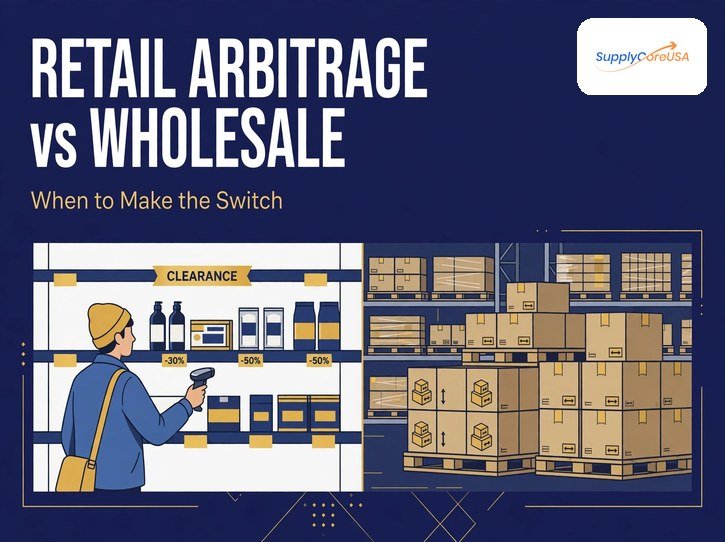
I talk to Amazon sellers every week, and I keep hearing the same story. They started scanning clearance shelves a year or two ago. It worked. Then one day they looked up and realized the hustle had become a treadmill. That is the moment wholesale starts making sense.
Why Arbitrage Stops Being Enough

Don’t get me wrong, retail arbitrage is a fantastic teacher. You know the drill. Walmart on a Tuesday morning. Target’s toy aisle in October. You grab something for seven bucks, list it at twenty-five, and feel like a genius when it sells. Along the way you actually learn the important stuff. How the Buy Box really behaves. What a sales rank number is actually telling you. How to read a Keepa chart without guessing.
The catch? It’s all manual. Every single unit passes through your hands and your car. You find fourteen units of a winner, sell out in a week, drive back, and the shelf is empty. Gone. You can never just reorder. Think about that for a second. A business where your best products can never be restocked.
Wholesale doesn’t have that problem. You find a distributor, you buy two hundred units of something proven, and when it sells you order it again. And if you use direct-to-FBA shipping, the supplier handles prep and sends it straight to Amazon. Your garage goes back to parking cars.
You’ll Feel When It’s Time
Nobody announces it. It just creeps up.
Maybe you’re spending entire days driving between stores and your revenue hasn’t moved in three months. Your time is the bottleneck now, not your effort. Wholesale flips that. You sit at a desk, open two price lists, answer some emails. Done by lunch.
Maybe you found an amazing product last month, sold through everything in days, and now it’s just gone. That empty feeling? Distributors don’t do that to you. They restock.
Maybe you’ve noticed the margins getting squeezed. Of course they are. Everyone with a phone found the same deal. Here’s what arbitrage never gives you: protection. Wholesale has authorized distribution and MAP pricing, which means you’re not racing forty strangers on the same listing.
Maybe you’re still avoiding gated categories. Grocery. Beauty. Health and personal care. Some of the best wholesale categories on Amazon, and plenty of arbitrage sellers never touch them because ungating sounds like a chore. It’s really not. This grocery ungating checklist lays it out plainly.
Or maybe it’s this: try to imagine selling your arbitrage business. You can’t. It’s you. Without you there’s nothing to sell. A wholesale business with real distributor accounts and reorder history? That’s an asset. Somebody would write a check for that.
Two Tuesdays

Arbitrage Tuesday. You’re up early. Three stores before lunch, two after. Some days you come home with four hundred dollars of inventory. Some days you burn thirty bucks in gas and find nothing. Then you spend the evening prepping boxes in the kitchen while dinner gets cold.
Wholesale Tuesday. You open your laptop. Two distributor price lists, twenty minutes, three reorders on ASINs you already know sell. The distributor preps it and ships it. You spend the afternoon looking for your next product line instead of taping boxes.
Same Amazon. Same FBA fees. Totally different life.
And the paperwork! Ask anyone who’s had an invoice rejected by Amazon what a retail receipt is worth. Nothing. Distributor invoices are clean and professional, exactly what Amazon asks for.
Making the Jump Without Falling Flat
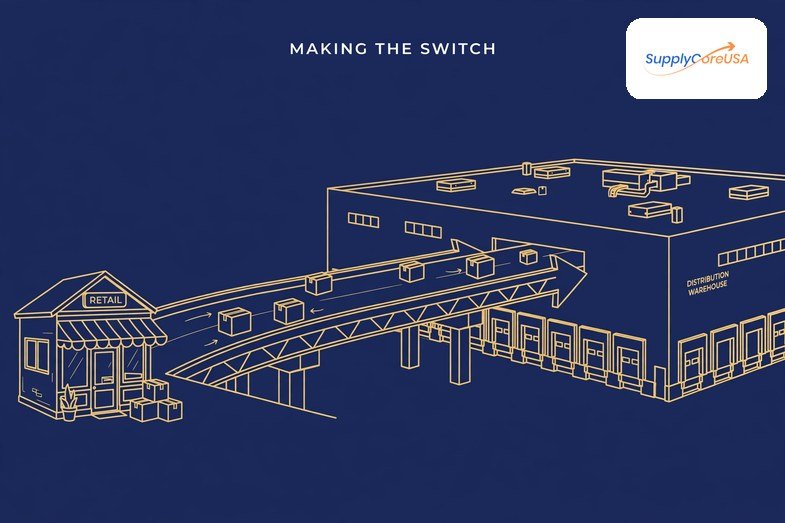
Please don’t quit arbitrage tomorrow. That’s not the move.
Keep it running. It pays your bills while you build the wholesale side. The fastest way to fail at this transition is killing your income first.
Then start tiny on wholesale. I’m talking two or three products. Pick categories you already know from your arbitrage days. If you kept flipping a certain grocery brand, call that brand’s distributor first. You already know it sells.
Now the part people skip: check out every distributor before sending money. There are fakes out there and some look very convincing. Read this guide on spotting fake wholesale suppliers first. It’ll save you a painful lesson.
Here’s where it gets fun. Take your arbitrage profits and buy wholesale inventory with them. That inventory needs no driving, no scanning, no Sunday prep marathons. Every cycle the wholesale side grows and the arbitrage side shrinks. That’s the flywheel.
One more thing. Give yourself a deadline. Ninety days is honest. I’ve seen too many sellers say they’ll “do both for a while” and then never actually commit to wholesale because arbitrage feels comfortable. Comfortable doesn’t scale.
Let’s Talk Money
Wholesale costs more to start. That’s just true. Five hundred dollars can launch an arbitrage hustle. A wholesale order worth placing usually starts around two to five thousand. But compare what one reorder earns against a month of store runs and the math gets friendly fast.
Start smaller than you want to. Prove it on two ASINs. Grow with profits. And here’s my one hard rule for you: don’t put money into inventory that you can’t stand to not see for sixty to ninety days.
Frequently Asked Questions
Is retail arbitrage still worth it?
Sure, for learning the game, but the margins keep thinning and the hours add up, so most sellers with bigger plans move to wholesale.
Can you make $10,000 a month selling on Amazon?
Plenty do, but they’re running wholesale or private label in basically every case I’ve seen; arbitrage alone almost never carries a solo seller there.
Is it better to sell wholesale or retail?
Wholesale if you want something that grows; arbitrage if you want the cheapest start possible. Most people serious about income end up in wholesale.
Is FBA still profitable in 2026?
With decent margins, yes. FBA actually favors sellers who source efficiently, which is wholesale’s whole thing.
How many Amazon sellers make over 100k?
No official number out there, but the surveys agree: it’s a small club, mostly wholesale and private label folks.
How much does Amazon take from a $100 sale?
About $30 to $40 once the 15% referral fee and FBA pick, pack, and storage are in; category decides the rest.
Final Word
Arbitrage taught you Amazon. Keep that knowledge, it’s genuinely valuable. But if half of what you just read felt familiar, you’ve already outgrown the clearance aisle. The sellers building real businesses in 2026 aren’t driving to more stores. They’re building relationships with distributors.
Thinking of switching? Chat with our team about wholesale sourcing shipped straight to FBA.